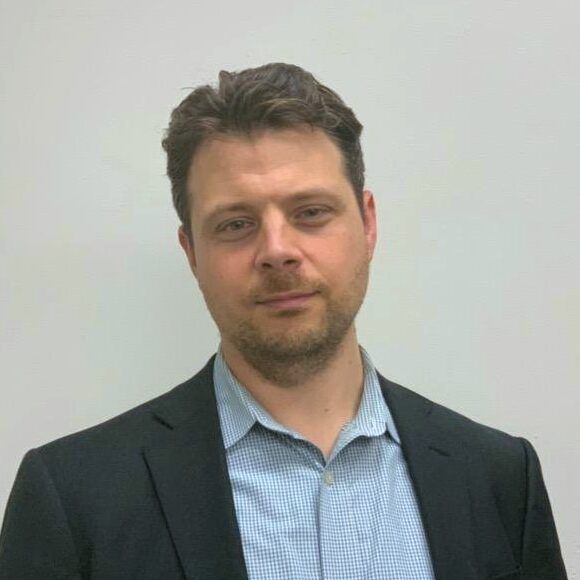
Nick Schmitt
The Friendship Bench Model: Community-led Mental Health and Peacebuilding
The Friendship Bench Model: Community-led Mental Health and Peacebuilding
The Friendship Bench Model began in Zimbabwe around 2006. Prof. Dixon Chibanda recognized the significant paucity of mental health infrastructure in his country and decided to do something about it. He installed a bench in Mbawe, Zimbabwe, a small town, and trained a handful of grandmothers to provide basic mental health treatment. 20 years later, it's grown to over 11 countries and has treated 776,876 individuals.
References to task shifting and task sharing in healthcare date back to the 1970s, but were mostly related to physical healthcare. It was not until about 20 years ago that the literature began suggesting that this type of care--training non-professionals, or "laypeople" to provide care, with oversight--could be expanded to mental health as well.
Now, the literature shows that mental health task-sharing has positive impacts on a community, individual, and family level. Communities with mental health task-sharing resources report more resilience, greater cohesion, increased trust, and in some cases, changed the community's attitude toward mental health; individuals who learn the skills learn to apply the skills directly to their own lives, which impacts the way they respond to and interact with their families, improving family happiness and cohesion.
At CMS, we've undertaken a pilot program to train 6 young people (ages 20-24) in mental-health task-sharing skills and pay them to be non-specialist providers to other young people within the Queensbridge Houses community. While still near the beginning steps of this program, we will talk about why Friendship Benches, what implementing such a program looks like, and how you could potentially implement Friendship Benches too. We will also talk about how Friendship Benches can help reduce conflict and build peace in communities.
About Nick Schmitt
With over a decade of dedicated experience in conflict resolution, Nicholas is a seasoned mediator, negotiator, and facilitator whose expertise spans diverse fields. Known for his work with not-for-profit organizations and community dispute resolution centers across New York City, Nicholas has played a pivotal role in civil, state Supreme, and Federal court disputes, as well as private conflicts. His practice includes mediation, conflict coaching, motivational interviewing, circle keeping, and dialogue facilitation. He currently serves as the Senior Director of Conflict Resolution with Community Mediation Services, Inc.
As an educator, Nicholas has taught mediation at several schools, bringing practical insights to aspiring conflict resolution professionals. He regularly presents and trains on mediation, conflict resolution, and de-escalation. His published work delves into the nuances of intellectual property mediation and the evolving field of online dispute resolution. He is currently seeking certification through the Educator's Neighborhood, a part of the Fred Rogers Institute, to implement Mr. Rogers' pedagogy into his training techniques.
Guided by a facilitative approach, Nicholas integrates both understanding-based and transformative models into his practice, ensuring a respectful and empowering process for all parties. He is a graduate of the Benjamin N. Cardozo School of Law, and holds a degree from Shimer College, a Great Books School.